

Are You 18 Or Over?
YesOr
No By clicking yes, you certify that you are over 18. By using this website, you agree to our Terms of Service.
A coalition of House Democrats has reignited the push to legalize cannabis nationwide, unveiling a new bill that would end federal prohibition, establish a regulatory framework for interstate commerce, and expunge nonviolent marijuana convictions. The move comes just over a year before the 2026 midterm elections, signaling that cannabis reform could once again become a defining campaign issue.
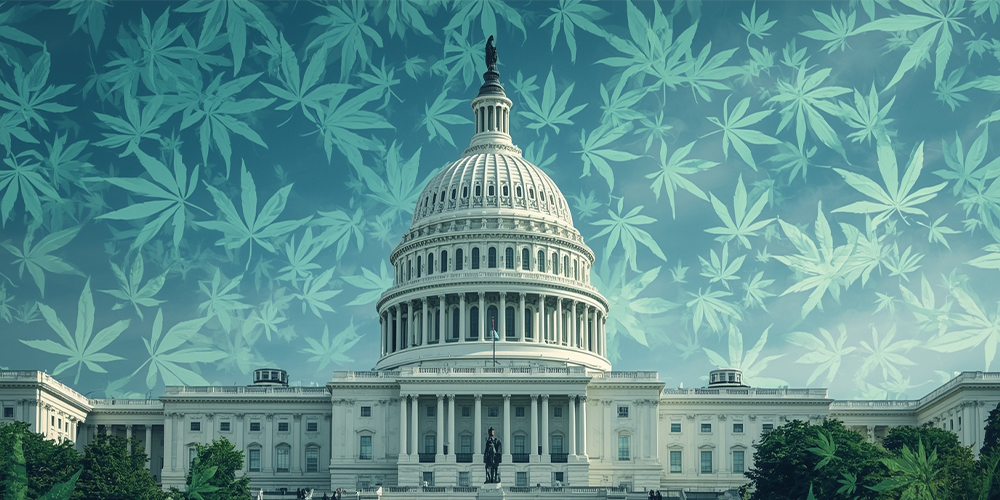
The legislation, introduced on Capitol Hill this week, builds on earlier versions of the Marijuana Opportunity Reinvestment and Expungement (MORE) Act. Its key provisions include:
Supporters of the bill argue that it will finally align federal law with the reality that 38 states have legalized medical cannabis and 24 states allow recreational use.
For the cannabis industry, federal legalization would be nothing short of a seismic shift. Currently, businesses face enormous hurdles due to federal restrictions:
For consumers, the benefits could include lower prices, wider product variety, and enhanced safety standards through federal oversight.
The bill arrives at a politically charged moment. With the 2026 midterms looming, Democrats are highlighting cannabis reform as a way to energize younger voters and communities disproportionately harmed by prohibition.
However, the path forward is far from guaranteed:
The U.S. cannabis market is projected to exceed $45 billion in annual sales by 2027, yet the industry continues to operate in legal limbo at the federal level. Internationally, countries like Germany and Canada have already legalized recreational cannabis, increasing pressure on the U.S. to modernize its policies.
Meanwhile, public opinion is firmly in favor of reform. Recent Gallup polling shows 70% of Americans support legal marijuana, including a majority of independents and nearly half of Republicans.
The reintroduction of federal cannabis legalization is less about immediate passage and more about shaping the national conversation ahead of the 2026 elections. While the bill faces steep hurdles in Congress, it underscores the growing recognition that federal prohibition is out of step with state policies and public sentiment.
Should this bill advance, it could finally resolve decades of legal contradictions and open the door to a fully integrated, federally regulated cannabis economy.
Rocket Weed Shop © 2025 All Rights Reserved.
Are You 18 Or Over?
YesOr
No By clicking yes, you certify that you are over 18. By using this website, you agree to our Terms of Service.